Marine Life
Baa Atoll is home to some of the most extraordinary marine encounters on the planet. From manta ray aggregations to whale shark sightings, every dive brings something remarkable.
Iconic Species
These are the headline species that draw divers and snorkellers from around the world to Baa Atoll. Sightings vary by season — plan your trip around what you most want to see.
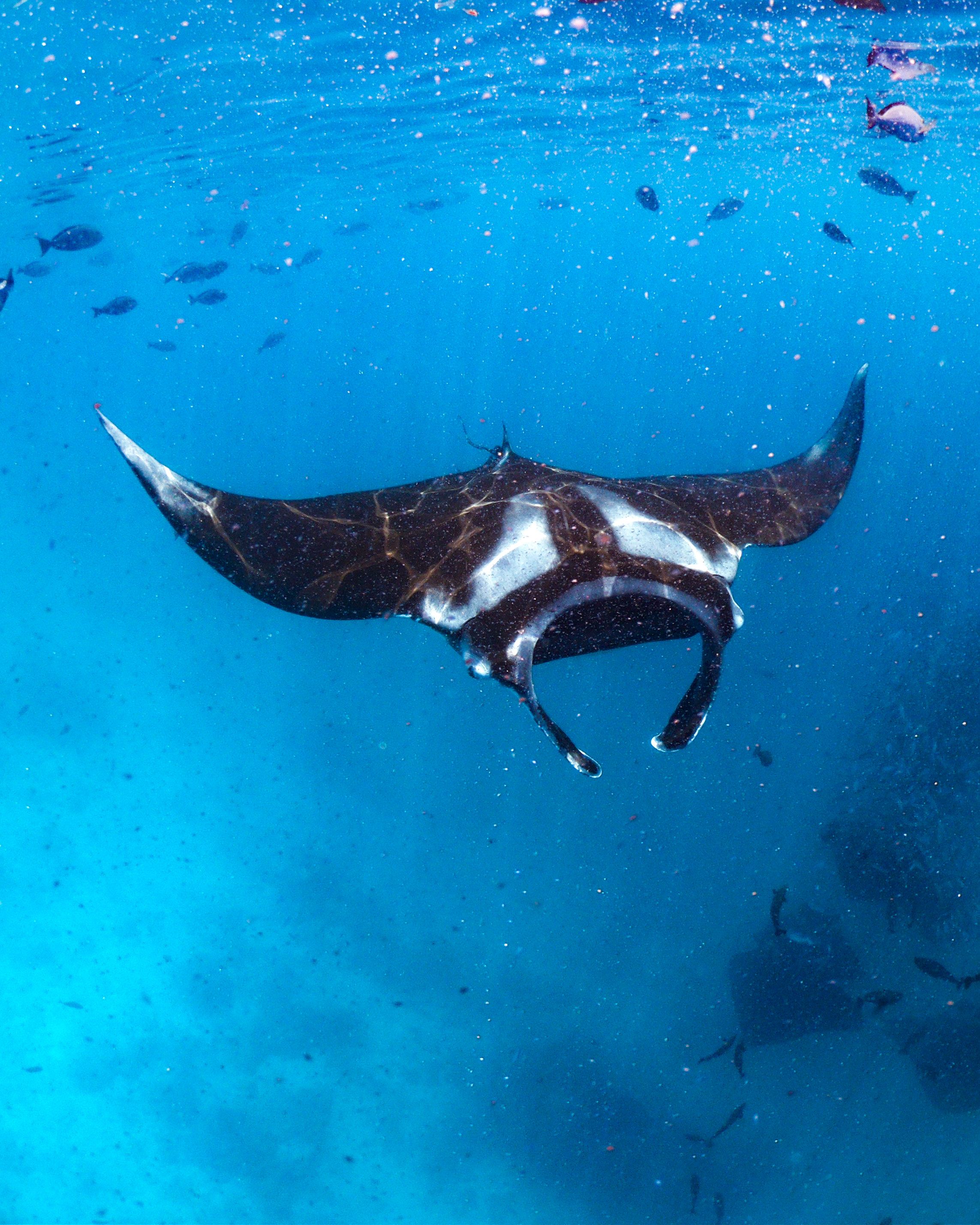
Oceanic Manta
Mobula birostris.
The oceanic manta ray is a magnificent, open ocean giant—graceful and powerful, with sweeping wings that can span up to seven meters, effortlessly gliding through the deep blue in search of plankton. Unlike reef mantas, they are more solitary and wide-ranging, embodying the vastness and mystery of the open sea.
June — November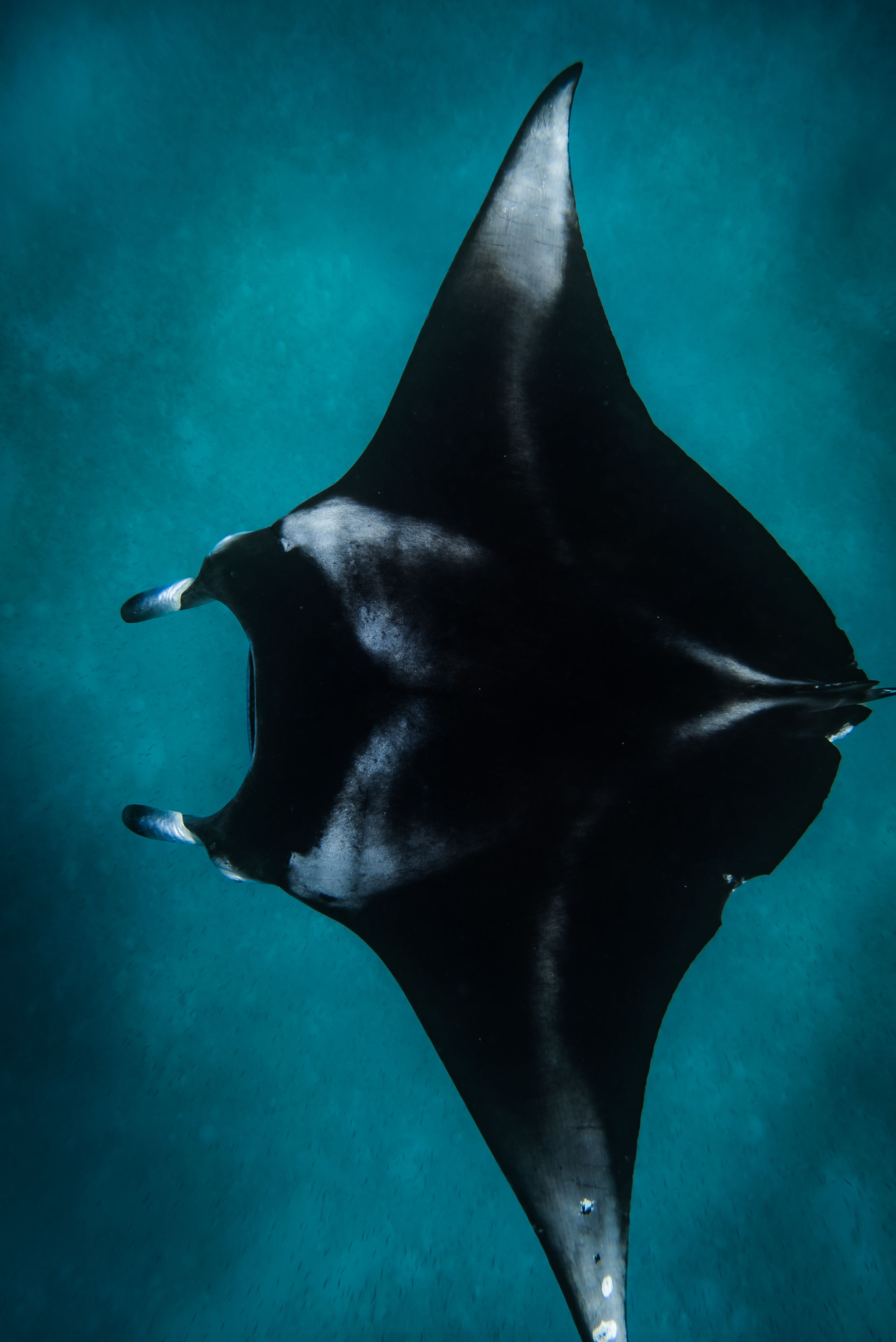
Reef Manta Ray
Mobula Alfredi
The star of Hanifaru Bay. Aggregations of 100+ during cyclone feeding events — one of the greatest marine spectacles on Earth. The reef manta ray is a species of ray in the family Mobulidae, one of the largest rays in the world. Among generally recognized species, it is the third-largest species of ray, surpassed by the Giant oceanic manta ray and the Atlantic manta ray
May — November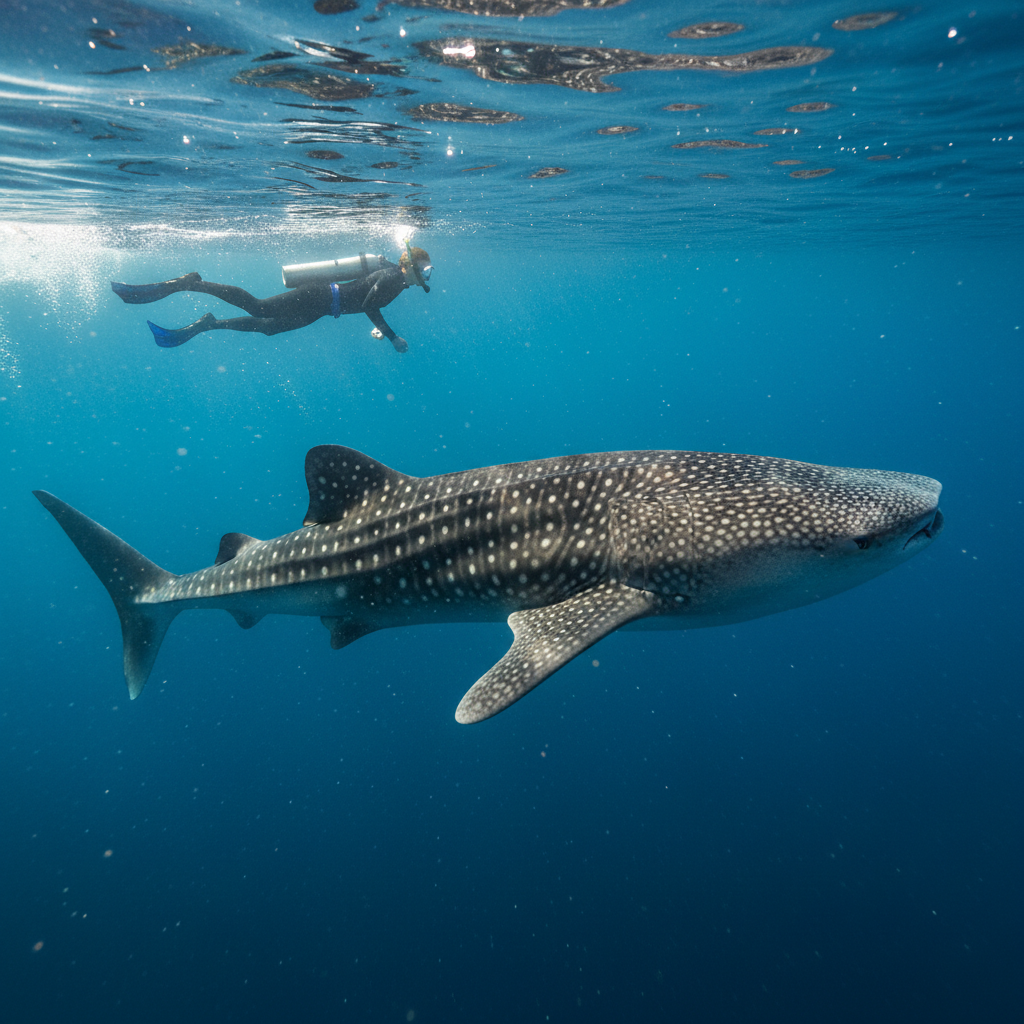
Whale Shark
Rhincodon typus
The largest fish in the ocean, whale sharks are gentle filter-feeders that can reach up to 12 metres in length. During the southwest monsoon, plankton-rich currents in Baa Atoll draw these magnificent creatures into shallow waters. Snorkelers at Hanifaru Bay often encounter them feeding alongside manta rays — a rare convergence found in very few places on Earth.
May — November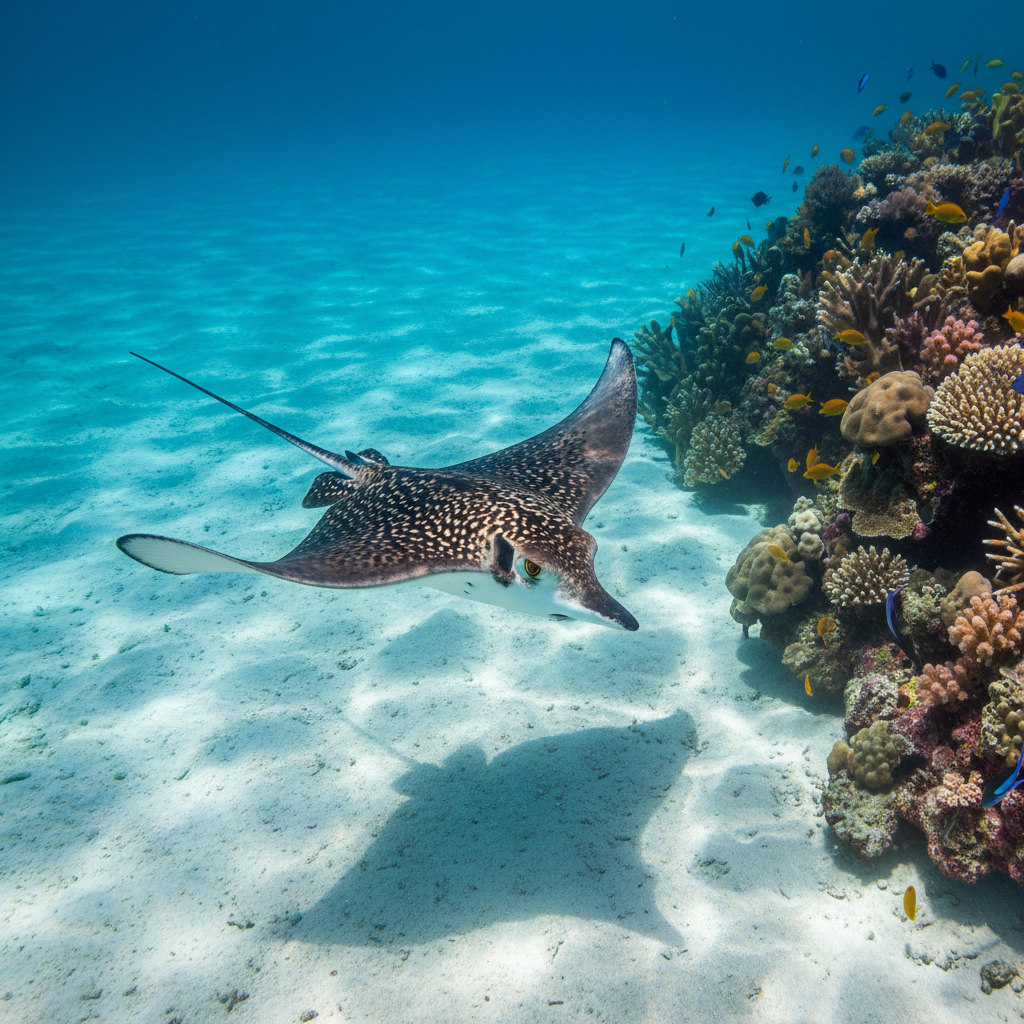
Eagle Ray
Aetobatus narinari
Spotted eagle rays are among the most elegant swimmers on the reef. With their distinctive white-spotted dark dorsal surface and long whip-like tails, they cruise sandy channels between reef formations, often in small groups. In Baa Atoll they are a year-round resident, frequently seen at cleaning stations. Their graceful, bird-like wing beats make them one of the most photogenic species on any dive.
January — December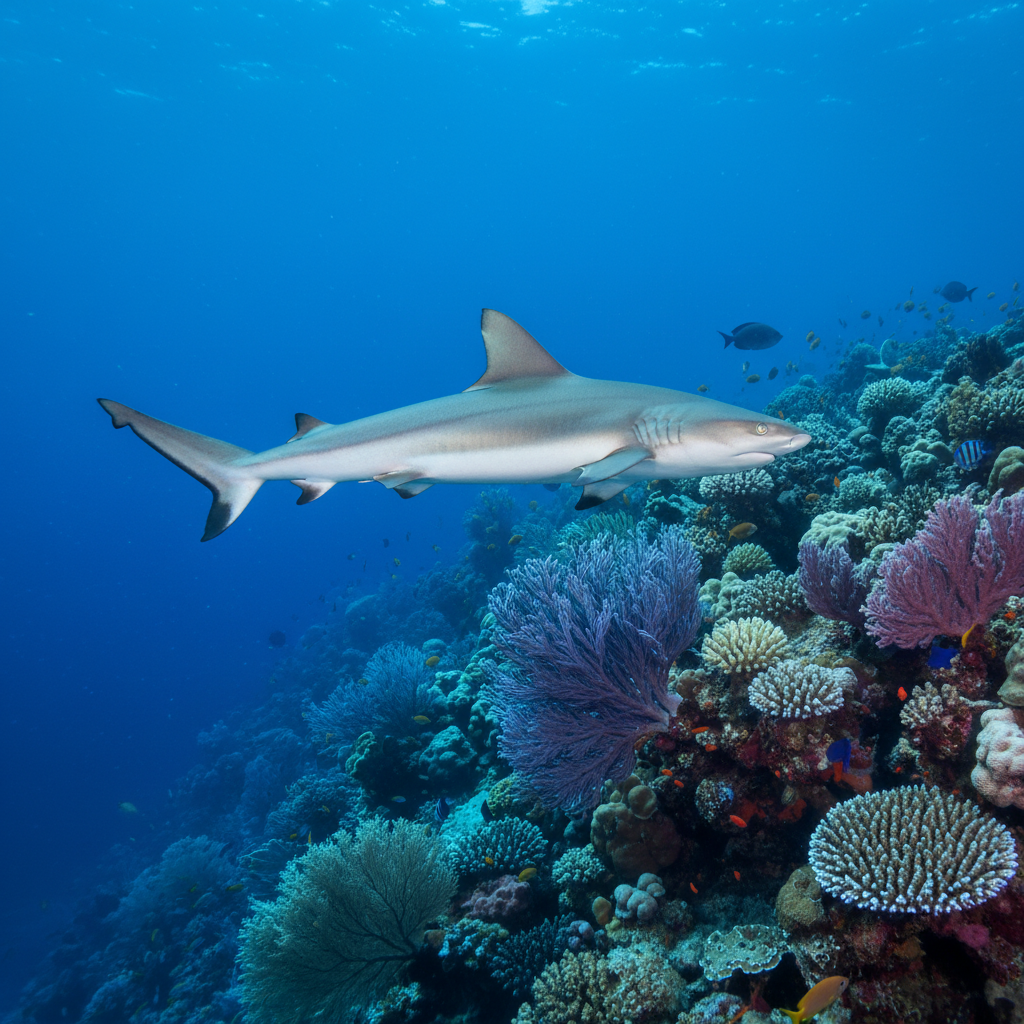
Grey Reef Shark
Carcharhinus amblyrhynchos
The grey reef shark is the quintessential reef predator of the Indo-Pacific. Sleek, fast, and perpetually patrolling, these sharks are a constant presence at Baa Atoll channel dive sites. Growing up to 1.9 metres, they hunt in packs along reef drop-offs and are most active during tidal changes when currents push prey through narrow passages.
January — DecemberHawksbill Sea Turtle
Eretmochelys imbricata
The hawksbill turtle is one of the most frequently encountered large animals on Baa Atoll reefs. Named for their narrow, pointed beak, they feed primarily on sponges growing in reef crevices. Hawksbills are seen on virtually every dive in the Maldives — resting under coral tables, grazing on the reef wall, or gliding effortlessly through blue water.
January — DecemberGreen Sea Turtle
Chelonia mydas
Green sea turtles are the gentle giants of Baa Atoll seagrass meadows and reef flats. Larger than hawksbills, they can weigh up to 200 kg and are distinguished by their smooth, olive-brown carapace. In the Maldives, green turtles are commonly spotted at cleaning stations, where they hover motionless while cleaner fish attend to their shells.
January — DecemberSpinner Dolphin
Stenella longirostris
Spinner dolphins are the acrobats of Baa Atoll, famous for their spectacular aerial spins — leaping from the water and rotating up to seven times before splashing down. A resident pod frequents the channels around Dharavandhoo, and boat trips regularly encounter groups of 20 to 100 individuals bow-riding and playing in the wake.
January — DecemberNapoleon Wrasse
Cheilinus undulatus
The Napoleon wrasse — also known as the humphead wrasse — is the largest member of the wrasse family, growing up to 2 metres. Their unmistakable bulging forehead and thick, fleshy lips make them instantly recognisable. In Baa Atoll, they are regularly encountered at thila dive sites, where they patrol the reef with a calm, almost regal bearing.
January — DecemberWhitetip Reef Shark
Triaenodon obesus
The whitetip reef shark is one of the most common sharks on Baa Atoll reefs. Easily identified by the white tips on their dorsal and tail fins, they spend much of the day resting in caves and under coral overhangs. At night they become active hunters, making them a highlight of night dives.
January — DecemberGiant Moray Eel
Gymnothorax javanicus
The giant moray is the largest moray eel in the world, reaching up to 3 metres in length. In Baa Atoll, they inhabit dramatic overhangs and crevices of thila dive sites, where their large heads protrude from holes in the reef. Despite their intimidating appearance, they are not aggressive toward divers.
January — DecemberNurse Shark
Nebrius ferrugineus
The tawny nurse shark is a large, docile bottom-dweller commonly found resting on sandy patches beneath coral overhangs in Baa Atoll. Growing up to 3.2 metres, they are easily recognised by their broad, flattened head and small barbels near the nostrils. Nurse sharks are primarily nocturnal, spending daylight hours stacked together in caves.
January — DecemberWhen to Visit
Southwest Monsoon (May–November)
Peak manta ray season at Hanifaru Bay. Whale shark encounters increase significantly. Plankton-rich waters attract filter-feeders in huge numbers. Visibility 10–25m on the outer reef, with occasional current dives offering thrilling shark encounters.
Northeast Monsoon (December–April)
Crystal-clear visibility up to 30m+. Ideal conditions for macro photography and reef exploration. Eagle rays, reef sharks, and turtles are present year-round. Calmer seas make this the best period for deeper dives and drift dives along the atoll rim.
Ready to Dive In?
Whether you're a certified diver or a first-time snorkeller, we'll help you experience the best of Baa Atoll's marine life.